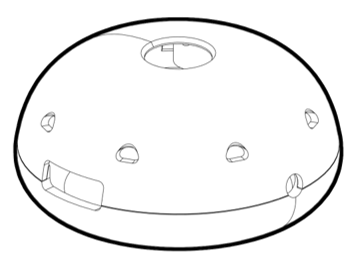
Robots and machines built to act in the real world have eyes and limbs already. Almost none of them can hear. We started Ordinary Lab to build that sense from the ground up — analog hardware, models, and the protocols that let many machines share what they hear, together. We began with the hardest case: hearing danger before anyone has to see it.
Security & safety hearing — SonoCop, our first shipping product.
A robotic hearing platform — momo microphone arrays, shared across many devices.
The sensory layer for physical AI — hearing built into any machine that acts in the real world.
We think about physical AI in terms of the senses it still doesn't have. Sight and motion came first; hearing came last, and it shows — most machines are effectively deaf to their own surroundings. We're closing that gap, one layer of the stack at a time.
We build that sense from the ground up — analog hardware, the models that interpret it, and a protocol that lets many devices share what each one hears in real time — rather than licensing it piecemeal. SonoCop, our first shipping product, is proof of that approach, not the reason we started.
Giving physical AI a sense of hearing takes more than one kind of expertise — the hardware that listens, the models that understand it, and the judgment to bring it to the people who need it first.
Suyeon Na
CEOService & business strategy, data visualization.
Jooyoung Ahn
CPOHardware, product design and acoustic AI models — from robot-audition research to Samsung and Yamaha's R&D labs.
Kibin Park
CTOHigh-speed hardware, firmware and AI systems — from flash-storage controllers to on-device inference engines.